
Key Takeaways
- Pets provide real emotional comfort and routine during a move to assisted living.
- Every community has different pet policies, so ask questions before moving in.
- Plan ahead for your pet’s daily care needs, including backup support from family.
- Care transitions like short-term rehab or skilled nursing may affect pet arrangements.
- Touring a community in person can help you get clear answers about pet policies.
Pets and the Move to Assisted Living
If you’ve spent years waking up to a wagging tail or a cat curled beside you, the idea of moving without your pet can feel like losing a piece of home. That bond is real, and it matters deeply when you’re making a big life change like moving into assisted living.
Yes, many assisted living communities welcome pets, and with a little preparation, bringing yours along can make the transition feel much more like home. The key is knowing what to ask, what to plan for, and how to set both you and your pet up for a comfortable start. Taking time to explore lifestyle options that align with your needs, including whether pets are welcome, is a great first step.
Why Pets Matter So Much in Senior Living
Pets do more than keep you company. They give your day shape and purpose. A morning walk, an afternoon cuddle, an evening feeding routine, these small moments add up to something meaningful.
For many people moving into senior living, that familiar rhythm can ease the emotional weight of a big transition. Animal companionship research suggests that pet ownership can reduce blood pressure, ease loneliness, and even lift mood, making that bond even more valuable during a major change.
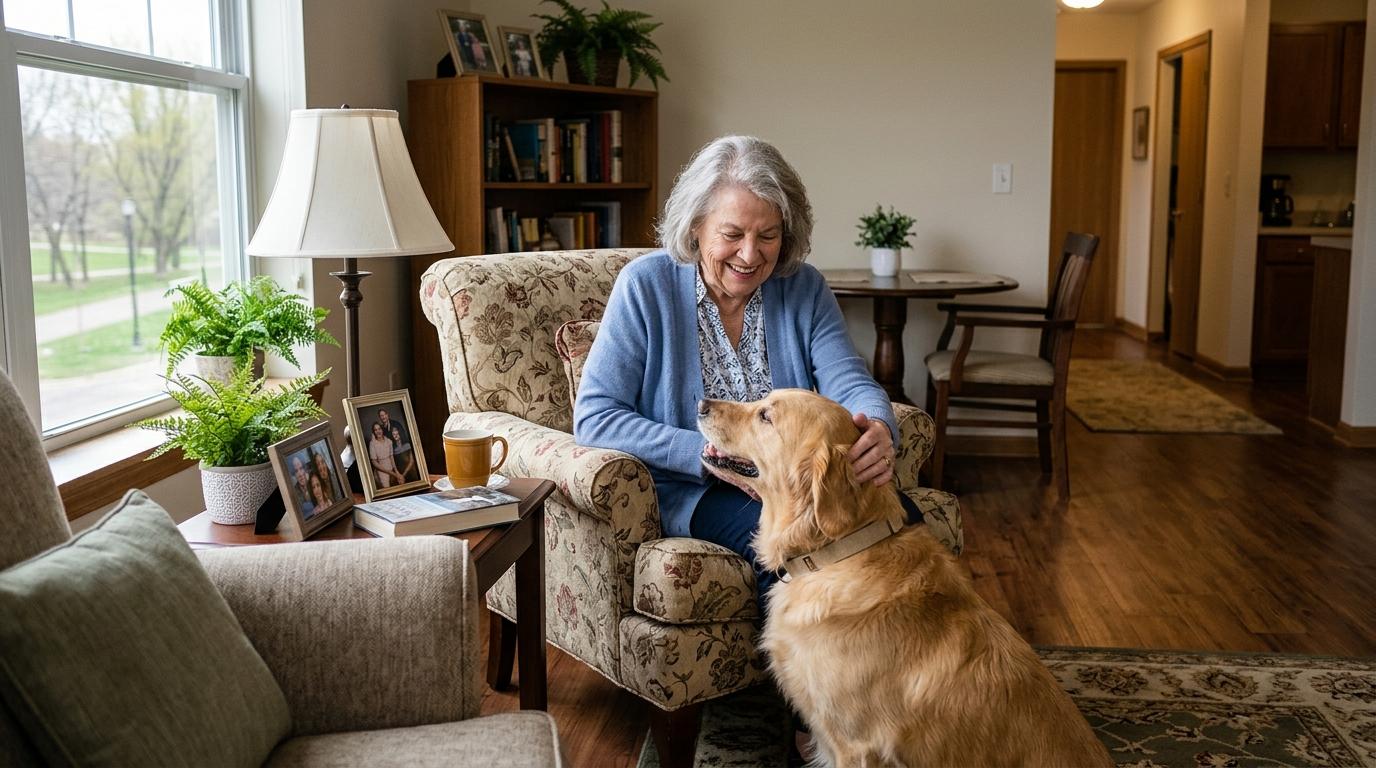
The comfort of a familiar animal is especially powerful during those first few weeks in a new space. Your pet knows you, and that recognition alone can bring a sense of calm and belonging when everything else feels unfamiliar. Many assisted living communities have recognized this connection and actively welcome four-legged residents because of it.
What to Ask Before You Move in with a Pet
Pet Policies and Community Rules
Not every community has the same rules, so it helps to come prepared with specific questions. Ask about size and breed restrictions, whether certain species are allowed, and which areas of the community your pet can access. Some communities welcome dogs and cats freely, while others have limitations worth knowing ahead of time.
You’ll also want to ask about any pet deposits or monthly fees tied to having a pet in your space. Knowing those costs upfront helps you plan without any surprises down the road. Taking a look at available floor plans ahead of time can also give you a better sense of the space your pet will be sharing with you.
Your Pet’s Care Needs
Think honestly about what your pet needs each day and who can help provide that care. Daily walks, grooming appointments, and vet visits are all part of the picture. If there are days when you need extra support or rest, having a plan in place for your pet’s care keeps both of you comfortable.
Talking with family members early about backup care is a smart move. Whether that means a family member steps in for a vet visit or handles a grooming appointment, having those conversations now takes pressure off later.

Tips for a Smooth Transition for You and Your Pet
Moving into a new space can be a lot for a pet to take in. Familiar items like a favorite blanket, a well-loved toy, or a familiar-smelling bed can help your pet feel grounded in a new environment. These small touches signal to your pet that, even though the space is new, home is still close.
Keeping your daily routine as consistent as possible goes a long way. Feed your pet at the same time, follow familiar walk schedules, and try to introduce new spaces gradually and calmly. Letting your pet explore at their own pace helps them adjust without feeling overwhelmed. Staying socially active yourself during this time also helps, and staying engaged in activities you enjoy can make the adjustment smoother for both of you.
When Care Needs Change, What Happens to Your Pet?
Shifts from Assisted Living to Skilled Care
Sometimes care needs shift, and a short-term rehab stay or skilled nursing support becomes part of the plan. These settings may have different pet policies than assisted living, and it’s worth understanding that ahead of time. Having a temporary care plan for your pet means you won’t have to scramble in the middle of a health transition.
Talk with family members about who can step in during those periods. Knowing your pet is in caring hands lets you focus on your own recovery without added worry. Learning more about available services and programs can help you feel more prepared for whatever comes next.
Long-Term Care and Pet Arrangements
If your needs shift into long-term care over time, your pet arrangements may need to shift as well. Speaking with the care team early about your wishes helps everyone stay on the same page. It also gives family members time to prepare, so your pet continues to receive the love and attention they’re used to. Long-term care planning guidance can help families think through these conversations before they’re needed.
Start the Conversation with a Senior Living Community
The most helpful thing you can do is visit in person and ask your questions face-to-face. A tour gives you a real feel for the space and lets you see firsthand how welcoming the environment is for both you and your pet. Bring a list of your pet’s habits, needs, and any quirks worth mentioning.
At Birchwood Senior Living, the team genuinely loves hearing about the people and the pets who might one day call this community home. Reach out today to schedule a tour and find out how your furry companion can make the move right along with you.